60% of Google searches now end without a single website click, and Google's AI Overviews are sitting on top of 75% of informational dental queries, per SearchX's 2026 dental SEO analysis. The "rank #1 and the patients come" playbook that worked in 2019 quietly stopped working in 2026.
The interesting part is not that AI Overviews exist. It is that the dental practices showing up inside those AI answers are a very different set than the ones ranking #1 in classic results — and most of the practices winning have no idea why they were picked. This article covers what we know about how Google's AI selects dental sources, what dental owners can actually do about it, and where the cost-benefit lands for a typical US practice.
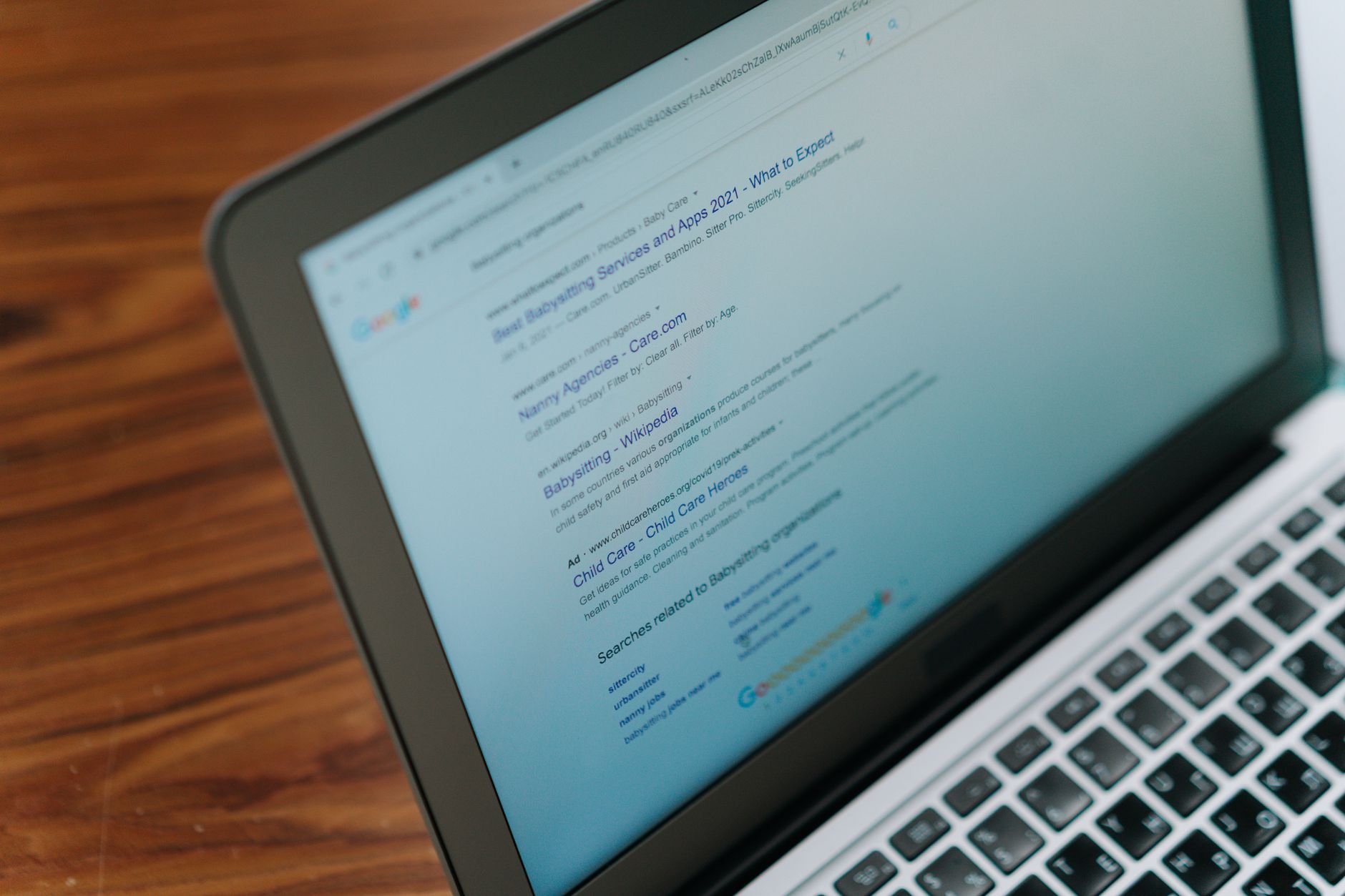
The shift is not subtle. Three patterns now define how a US patient finds a dentist:
- The AI Overview answers the question — "what's the difference between veneers and crowns", "is teeth whitening covered by insurance", "how often should kids see a dentist" — without the patient ever clicking a link.
- The map pack still controls the visit — when intent shifts to "dentist near me" or "open dentist now", 75% of clicks go to the top three map results.
- The website itself takes a smaller share than at any point in the last decade. It still matters, but its job has shifted from "win the click" to "convince the visitor in 8 seconds."
Practices featured inside AI Overview results report roughly 3× the brand recall of practices that rank classically — but that surface is brutally selective. Most dental sites are not eligible to be cited by the AI at all, because they look like every other practice site Google has already seen.
Share of US dental queries by surface, where the patient's attention actually lands
Sources: SearchX 2026, LocalMighty 2026 dental SEO data. Map pack and zero-click rates are non-overlapping measures.
The exact ranking inputs are proprietary, but a few patterns are now clear from the live behavior of dental queries in 2026:
1. Substantive answers to specific questions
A 250-word page titled "Family Dentistry" that says you offer cleanings, fillings, and crowns is invisible to AI Overviews. A 1,200-word piece that answers "how long does a dental crown last in 2026?" — with specific numbers, materials, and aftercare — has a shot at being cited. The AI is rewarding question-specific content, not category-level content. The practical implication: the right number of pages on a dental site in 2026 is not 8 (the typical brochure layout). It is closer to 40 — one per question patients actually type.
2. Schema and structured data
Dentist schema markup, FAQ schema, and LocalBusiness schema dramatically increase the chance of being parsed correctly. Google still cannot magically infer that "we accept most PPOs" means "Aetna, Delta Dental, MetLife, Cigna" unless that list is on the page in machine-readable form. Same for hours of operation, accepted insurance plans, services offered, and accessibility features. The schema is the data layer the AI parses to decide whether to cite you.
3. Fresh, citable signals
A practice that has earned three new Google reviews this week, posted to its Google Business Profile twice this month, and updated its hours for a holiday is broadcasting freshness signals. A profile that has not been touched in 14 months is broadcasting "abandoned." The AI prefers citing the first.
4. Local-pack proxy signals
Many AI Overviews for "near me"-type dental queries lean on map-pack signals: review volume, review velocity, GBP completeness, citation accuracy across NAP directories. LocalMighty's 2026 data shows GBP profile completeness alone accounts for roughly 32% of local-pack ranking weight.
The 2026 query mix on dental searches has shifted in a way most practice owners have not internalized. Three categories now dominate AI-Overview-eligible queries:
Category 1: Cost and insurance questions (highest AI Overview rate)
"How much does a root canal cost without insurance in [city]"; "what dental insurance accepts which plans"; "is teeth whitening covered by Delta Dental"; "what's the cheapest emergency dentist near me." These queries have the highest AI Overview presence (over 80% of dental cost-related queries trigger an AI Overview as of early 2026), and they are also the queries that least often produce a click — patients want the number, not a sales page.
Category 2: Procedure and aftercare questions
"How long does a dental implant last"; "is sedation dentistry safe for kids"; "what to expect after wisdom tooth extraction"; "do veneers ruin your real teeth." These queries trigger AI Overviews at roughly 70-75% rates, and they are where the practice content engine wins or loses — generic syndicated content gets ignored, practice-authored substantive answers get cited.
Category 3: Local-intent practitioner questions (highest visit conversion)
"Best pediatric dentist in [city]"; "Spanish-speaking dentist near me"; "dentist open Saturday in [neighborhood]"; "[city] dentist that takes new patients." These queries trigger map-pack results more often than AI Overviews — but the AI Overview, when it does appear, leans heavily on review volume and GBP signal density. Practices winning Category 3 queries are typically winning Categories 1 and 2 in parallel because the same content engine fuels both.
Most of the wins are unglamorous. They are also the same wins as a year ago — just with higher stakes now that AI Overviews have changed the click economics.
- Publish answer-specific content monthly. Pick the 12 questions a real patient would type into Google about your specialty. Write a real answer for each. Not a paragraph — an article.
- Add Dentist + FAQ schema to every page. The dev work is two hours. The visibility lift across AI Overviews is non-trivial.
- Run a review cadence, not a review campaign. A practice receiving three detailed reviews a week outranks a practice with 1,000 reviews that have not been updated in months. This is now public Google guidance.
- Keep your GBP fresh. Weekly post, monthly photo update, hours kept current, services list complete. Most practices skip half of this.
- Measure brand-recall, not just clicks. Direct visits, branded searches, and "called us yesterday" intake notes are now better proxies for SEO health than raw traffic.
For a US dental practice starting from a typical "8-page brochure site + 15 reviews + a GBP last touched 8 months ago" baseline, the realistic 90-day plan looks like this. None of these steps is technically difficult; the operational discipline is the hard part.
"The dental practices that quietly took over their cities' search results in 2025 and 2026 did not crack a Google algorithm secret. They published answer-specific content, kept their reviews flowing, and treated their Google Business Profile like a primary marketing channel."— Editorial summary
Days 1-30: foundation
- Audit the current site. Identify every page that lacks a question-shaped headline. (A page titled "Family Dentistry" probably needs to become "How Often Should My Family See the Dentist?" to be AI-eligible.)
- Claim and complete the Google Business Profile. Hours, services, accepted insurance, photos, accessibility features, holiday hours — every field. Add a weekly post calendar starting day 1.
- Add Dentist + LocalBusiness + FAQ schema to the homepage and main service pages. Use Google's Rich Results Test to verify it parses.
- Set up a review-request workflow that fires after every visit. The cadence target is 3 new reviews a week, not 30 in a sprint then nothing.
Days 31-60: content engine
- Publish 12 question-shaped articles covering Categories 1, 2, and 3 from the section above. These are not 400-word filler pages — they are 1,200-1,800 word articles with specific numbers, photos, and a clear practice-authored voice.
- Add an FAQ accordion to the homepage and the top 3 service pages. 5-7 Q&As each. Schema-marked.
- Run a content audit on every existing page for outdated information (insurance plans, accepted hours, doctor bios). Google notices stale content; AI Overviews demote it.
Days 61-90: optimization and measurement
- Search the queries you want to win. Use Google's incognito or a separate browser profile. Note where you appear (AI Overview, map pack, organic, nowhere) for each.
- For queries where you do not appear in the AI Overview, identify which competitor or generic source is being cited and write a substantively better page on that exact question.
- Track three KPIs: branded search volume (Google Search Console), direct-traffic share (analytics), and "how did you hear about us" intake notes. These are your AI-Overview-era SEO health proxies.
The plan above is straightforward. The execution kills it. Practices stall in three predictable places:
- Content production: the practice manager does not have time to write 12 articles a year, and outsourced agencies write generic copy the AI ignores.
- Review velocity: the front desk forgets to ask, patients forget to leave one, and the count drifts down.
- GBP discipline: nobody owns it. It gets touched once a quarter when something breaks.
This is the gap that done-for-you platforms now fill. TheBigBot's Dental CRM ships with an AI-driven content engine that publishes answer-specific articles under the practice's brand, an automated review-request workflow that fires after every visit, and a Google Business Profile sync that keeps posts and updates flowing without the front desk doing the work. The practice gets the SEO compounding without paying for an agency, a content writer, and a review tool separately.
Almost as important as the playbook is what to stop doing. The list of dental SEO tactics that worked in 2019 and now actively hurt:
- Buying syndicated dental content. Identical content rewritten and dropped on 200 dental sites. Google's algorithm has been good at detecting this for years; AI Overviews actively penalize it.
- Asking patients to leave reviews on a private rating page. Off-Google reviews do not feed map-pack signals. Direct patients to your Google Business Profile review link.
- Stuffing the homepage with city + service variants. "Best Dentist Phoenix Best Dentist Tempe Best Dentist Mesa." Google's spam updates are now very efficient at flagging this and demoting the site.
- Buying directory citations in bulk. A handful of high-quality citations (Healthgrades, Yelp, BBB, state dental association, Insider Pages) is fine. 200 spammy citations from a $99/month service hurts.
- Long press releases announcing every new piece of equipment. Patients do not search for "Cone Beam CT scanner near me." They search for "is a 3D dental scan covered by insurance." Write the second; skip the first.
Is dental SEO still worth it if AI Overviews are taking the clicks?+
Yes, but the ROI calculation has shifted. Direct clicks from organic search are down across most dental queries; brand recall, branded searches, and map-pack visits are up for practices that get cited inside AI results. The metric that matters in 2026 is not "how many clicks did we get from page one" — it is "how often does our practice get mentioned when someone asks Google about dentistry in our city."
How do I check whether my practice shows up in AI Overviews?+
Search 10 to 20 questions a real patient might ask — "best dentist for kids in [your city]", "how much do dental implants cost in [your state]", "what insurance does [your area] dentists accept" — and screenshot what the AI Overview returns. If your practice is cited, you are doing something right. If a competitor or a generic source like WebMD is cited, that is your gap to close.
How long does it take to start showing up in AI Overviews?+
Most US dental practices that publish answer-specific content with proper schema and maintain review velocity start seeing AI citations in 60 to 120 days. The faster results come from practices in less competitive metros and from practices that already have strong GBP and review foundations.
Do paid ads help with AI Overview visibility?+
Not directly. Google's AI Overviews source from organic and structured-data signals, not from paid placements. Paid ads can drive immediate traffic and reviews, which indirectly help, but you cannot buy your way into the AI summary box.
What is the single highest-leverage move for a small US dental practice in 2026?+
Review velocity. The data is unusually consistent across SEO sources: a practice publishing three detailed Google reviews a week beats a practice with a much higher static review count. It is also the only SEO lever a small practice can fully control without an agency.
Does posting on social media help dental SEO?+
Indirectly. Social signals do not directly feed search rankings, but they do build branded search demand (people Googling your practice name after seeing a post). Branded search demand is one of the strongest secondary signals Google's algorithm uses for E-E-A-T (Experience, Expertise, Authoritativeness, Trust). The right way to think about social: it builds the demand that strengthens your search performance, not the other way around.
What about voice search — is that a separate priority?+
Voice search shares most of its underlying signals with AI Overviews. The same content (question-shaped, answered concisely, schema-marked) that gets cited inside an AI Overview is also what gets read aloud by Google Assistant or Siri. Optimizing for AI Overviews is functionally optimizing for voice search at the same time.
How does this work for multi-location DSOs?+
Each location needs its own GBP, its own location-specific landing page, and its own review velocity. The content engine and the centralized SEO discipline can be shared across the DSO; the local signals cannot. The biggest mistake DSOs make is treating their 30 locations as one SEO surface — Google treats them as 30, and so should the marketing team.
The dental practices that quietly took over their cities' search results in 2025 and 2026 did not crack a Google algorithm secret. They published answer-specific content, kept their reviews flowing, and treated their Google Business Profile like a primary marketing channel. The shift to AI Overviews simply made the same fundamentals more decisive — the practices doing them are now visible before the click happens, and the practices ignoring them are invisible whether they rank or not.
Practices using TheBigBot's done-for-you Dental CRM ship the full content engine, automated patient recall, review-harvesting workflow, and GBP sync inside one login that's typically live in 3 days. If you'd rather see what that looks like running on your practice than write the next 12 articles yourself, book a 20-minute demo.
References & sources
- SearchX's 2026 dental SEO analysis — searchxpro.com
- 75% of clicks go to the top three map results — searchxpro.com
- LocalMighty's 2026 data — localmighty.com